
What Is the NOVA Food Classification System?
The NOVA system is the most widely used method for classifying foods based on how processed they are. It divides foods into four groups — from minimally processed foods like vegetables and eggs, to ultra-processed foods like fizzy drinks and packaged snacks. The system has become increasingly popular in recent years because research suggests diets high in ultra-processed food may be linked to poorer health outcomes and increased risk of certain diseases. However, the topic is far more nuanced than many social media posts would suggest.
The full scientific explanation is far more complicated and comes from a report called “The UN Decade of Nutrition, The NOVA Food Classification and the Trouble with Ultra-Processing.” Thankfully, you do not need to read that entire report to understand the basics.
Why Does NOVA Matter?
Generally speaking, the NOVA system is a very useful framework for understanding UPF. A simplified way to understand it is to eat more foods from Groups 1, 2 and 3 and rely less on foods from Group 4.
That said, NOVA should not be treated as a perfect rulebook. The system focuses primarily on processing level — not overall nutritional value. Some food manufacturers and nutrition experts have criticised NOVA for this reason, arguing that nutritional composition and wider dietary patterns also matter. This means context is important. The goal is not perfection or fear of food — it is simply understanding how foods are made and making more informed choices over time.
The Four NOVA Groups
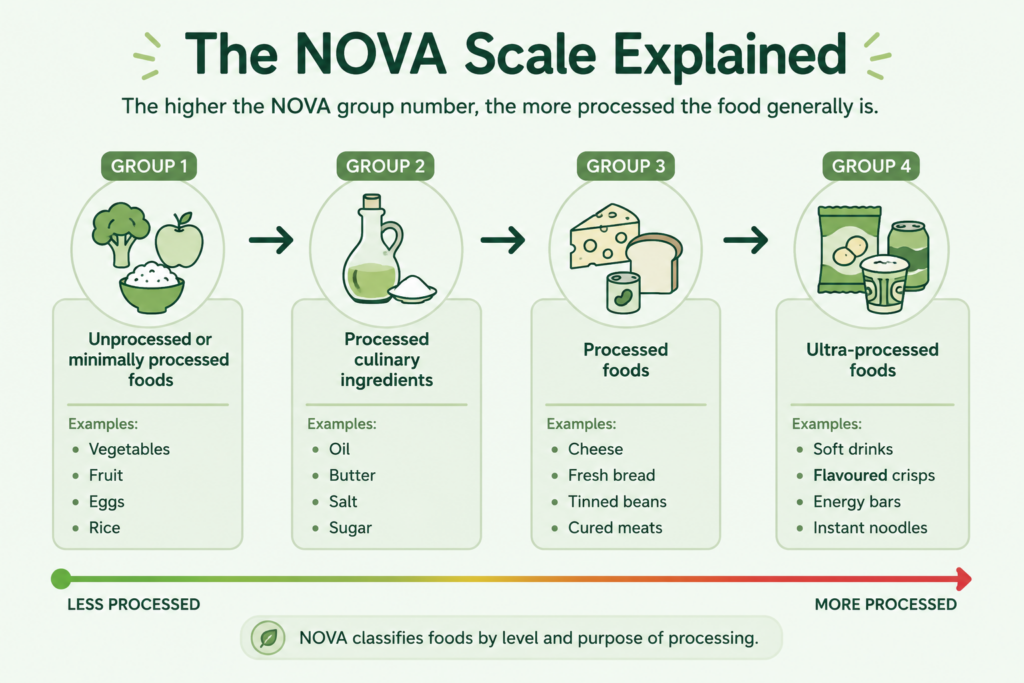
The NOVA system divides foods into four categories:
- Group 1 – Unprocessed or minimally processed foods
- Group 2 – Processed culinary ingredients
- Group 3 – Processed foods
- Group 4 – Ultra-processed foods
Group 1 – Unprocessed or Minimally Processed Foods
This is the gold star category.
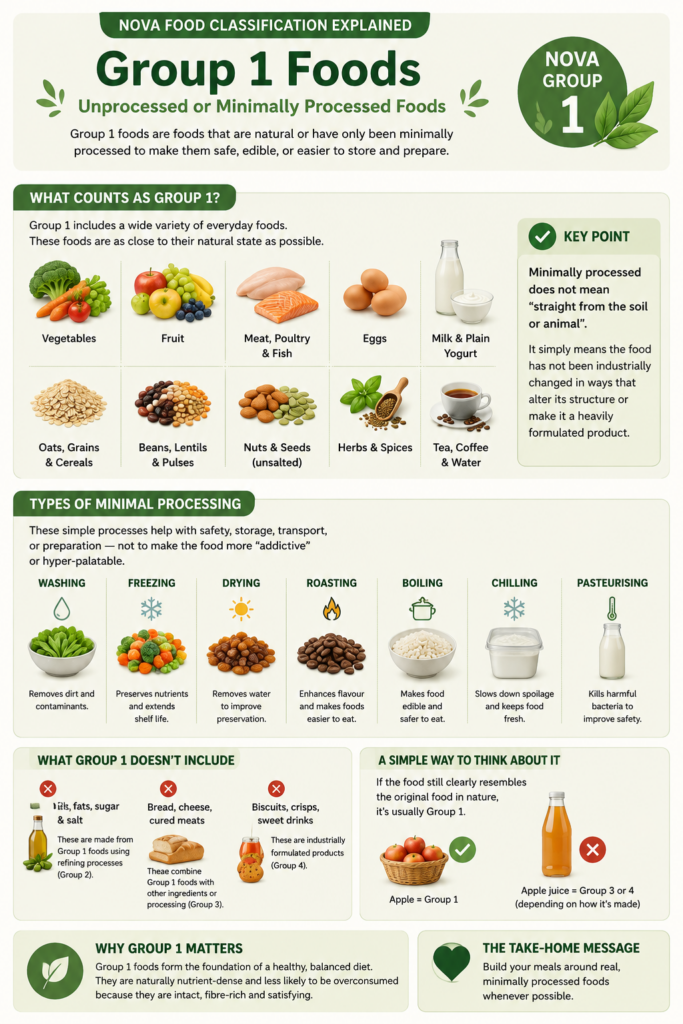
Group 1 includes foods that are either completely natural or have only undergone minimal processing to make them safe, edible, storable or easier to prepare.
Examples include:
- vegetables,
- fruit,
- eggs,
- milk,
- plain yoghurt,
- oats,
- lentils,
- chickpeas,
- unsalted nuts,
- herbs,
- spices,
- tea,
- and coffee.
One of the most important things to understand is that “minimally processed” does not mean “straight from the ground” or “completely untouched.” Processes like washing, freezing, drying, roasting, boiling, chilling and pasteurising are all considered minimal processing.
This means foods like frozen vegetables, dried fruit and tinned vegetables in water can still fall into NOVA Group 1. A useful way to think about Group 1 foods is this:
The product still clearly resembles the original food.
For example:
- Olives that look like olives = Group 1
- Olive oil = Group 2
Group 2 – Processed Culinary Ingredients
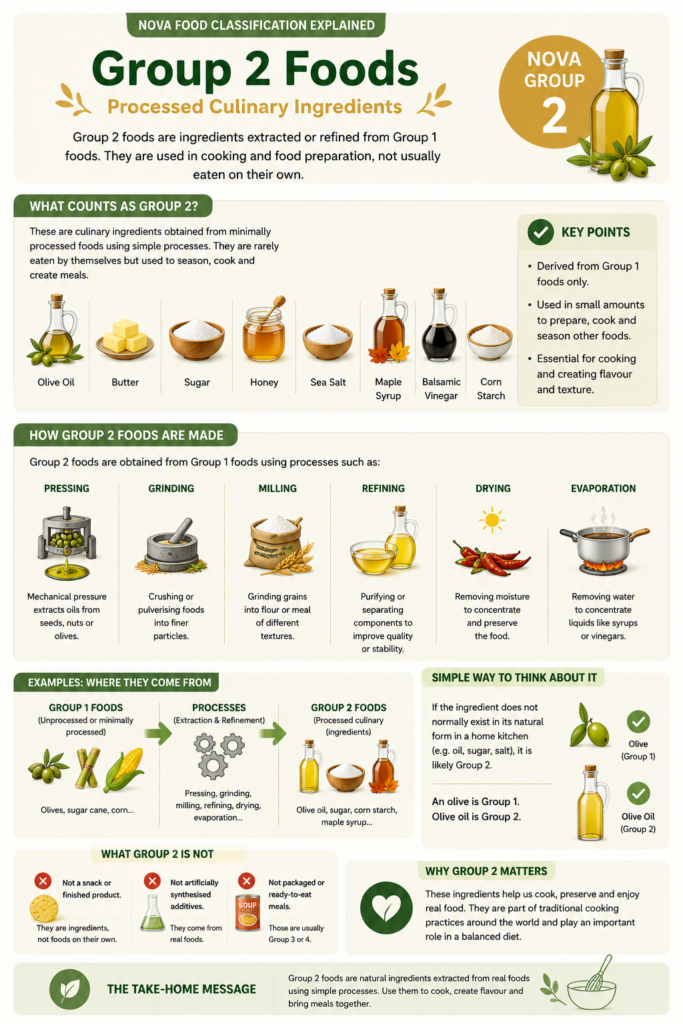
Group 2 foods are ingredients made from Group 1 foods using processes such as pressing, grinding, milling, refining or drying. These ingredients are usually used in cooking rather than eaten on their own.
Examples include:
- olive oil,
- butter,
- sugar,
- sea salt,
- honey,
- maple syrup,
- balsamic vinegar,
- and corn starch.
These foods are absolutely encouraged within the NOVA framework and are an important part of cooking and meal preparation. Sometimes the difference between Group 1 and Group 2 can feel slightly confusing — but in practical terms, the distinction is rarely important for everyday eating.
A simple example:
- An olive = Group 1
- Olive oil = Group 2
The olive oil no longer physically resembles the olive because it has been processed into a culinary ingredient.
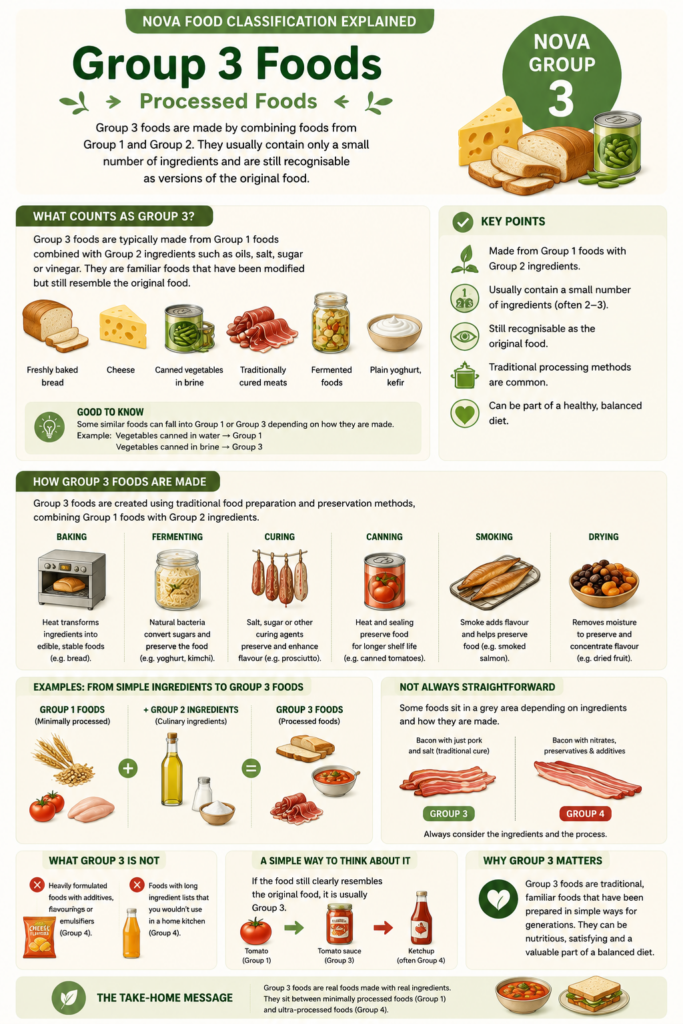
Group 3 – Processed Foods
Group 3 foods are generally made by combining Group 1 foods with Group 2 ingredients. These foods usually contain only a small number of ingredients and are still recognisable as versions of the original food.
Examples include:
- cheese,
- freshly baked bread,
- canned vegetables in brine,
- traditionally cured meats,
- and some fermented foods.
Vegetables canned in water may fall into Group 1, while vegetables canned in brine may fall into Group 3. Both are still be perfectly reasonable food choices. A helpful way to think about this category is:
The food has been modified, but it still clearly resembles the original food.
This is also where things can become more nuanced. Some similar-looking products may fall into completely different NOVA groups depending on ingredients, additives, manufacturing methods and forumulation.
For example:
- traditionally cured prosciutto made with pork and salt may fall into Group 3,
- while heavily preserved processed meats with additives may fall into Group 4.
This is why reading ingredients and understanding formulation becomes increasingly important.
Group 4 – Ultra-Processed Foods
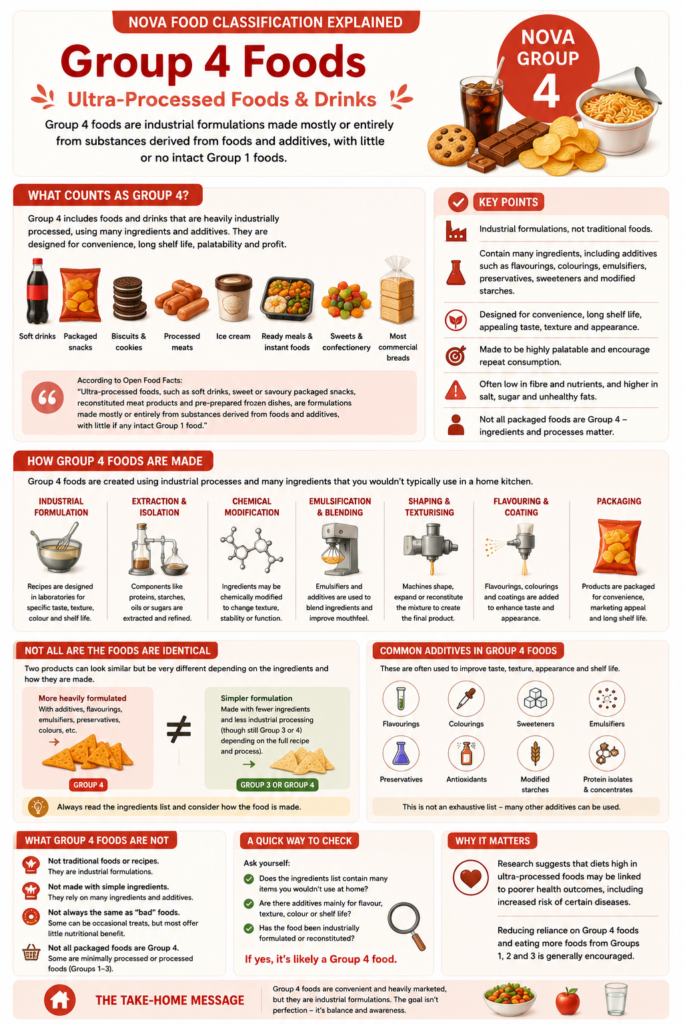
Group 4 contains foods that are typically industrial formulations rather than traditional foods. These products are often designed for convenience, shelf life, texture, flavour and hyper-palatability.
According to Open Food Facts:
“Ultra-processed foods, such as soft drinks, sweet or savoury packaged snacks, reconstituted meat products and pre-prepared frozen dishes, are formulations made mostly or entirely from substances derived from foods and additives, with little if any intact Group 1 food.”
Ultra-processed foods often contain flavourings, emulsifiers, preservatives, sweeteners, colourings, modified starches or protein isolates.
Common examples include:
- soft drinks,
- packaged snacks,
- sweets,
- confectionery,
- instant noodles,
- heavily processed meats,
- many frozen ready meals,
- and many commercial baked goods.
You may notice the word “common” appears here. That is intentional. Not every pizza, crisp, biscuit, sausage, or ice cream automatically falls into NOVA Group 4. Two very similar products may belong to different NOVA groups depending on:
- ingredients,
- manufacturing process,
- and formulation.
That is one reason why the NOVA system can sometimes feel confusing at first. The simplest starting point is usually to read the ingredient list and ask:
- Does this resemble real food?
- Are most ingredients things used in a home kitchen?
- Is the product heavily formulated for flavour, texture, convenience, or shelf life?
For a deeper breakdown of this idea, check out:
Understanding UPF Through the Tortilla Chip Example
Is NOVA Perfect?
No — and it is important not to treat it as such. The NOVA system is a helpful educational framework, but it does have limitations.
For example:
- it does not directly measure nutritional value,
- some foods fall into grey areas,
- and foods within the same NOVA group can still vary significantly.
This is why overall dietary patterns matter far more than obsessing over individual products. A diet made mostly from minimally processed foods is generally encouraged — but occasional UPFs do not automatically make a diet unhealthy.
Final Thoughts
The NOVA system is best used as a guide, not a strict rulebook. Its biggest strength is that it helps people become more aware of:
- how foods are made,
- why certain products are heavily formulated,
- and how modern food environments influence eating habits.
The goal is not perfection. It is simply to:
- eat more real, minimally processed foods where practical,
- rely less on heavily formulated ultra-processed products,
- and make informed decisions that work for your lifestyle.
Reducing UPF is not about fear — it is about understanding.
Leave a Reply
You must be logged in to post a comment.